What Do You Wear Under a Kigurumi?
Slipping into a kigurumi is cozy, but what goes underneath matters more than you’d think. The wrong choice leaves you sweaty and uncomfortable; the right one keeps you warm, mobile, and ready for hours of wear. Here’s exactly what to put on before zipping up.
🧵 Understanding Kigurumi Fabric and Why It Affects Your Layering Choice
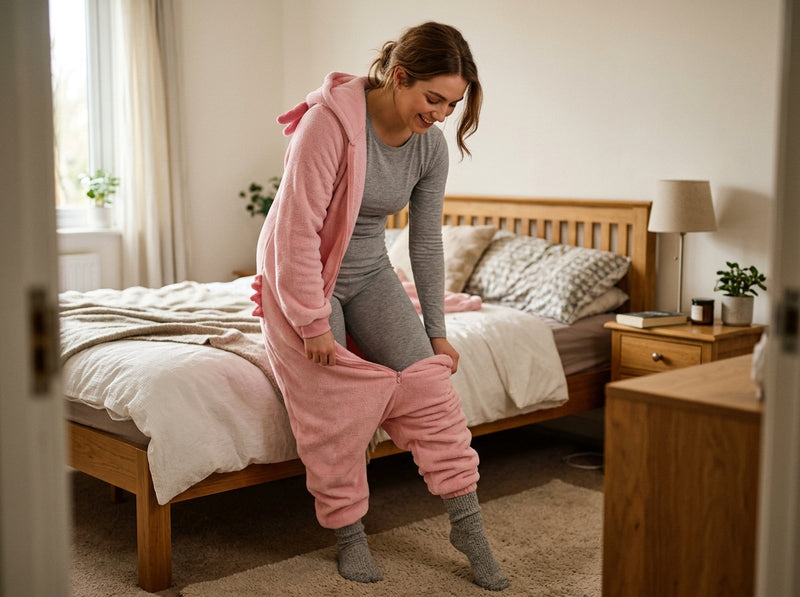
Most kigurumi are made from fleece or polar fleece, a synthetic material that traps heat efficiently. Some styles use softer plush or minky fabric on the outside, with a lighter lining inside. Knowing your kigurumi’s material is the first step to choosing the right underlayer.
Fleece doesn’t breathe the way cotton or linen does. It holds warmth close to the body, which is great in winter but can become stifling indoors or during active wear. This is why what you wear underneath directly impacts your comfort level throughout the day or night.
A few things to consider before layering:
- Is your kigurumi lined or unlined on the inside?
- Will you be wearing it indoors, outdoors, or both?
- Are you planning to sleep in it or wear it for events?
- Do you run hot or cold naturally?
- How long will you be wearing it in one stretch?
👕 The Most Common Underlayers for Kigurumi Wear
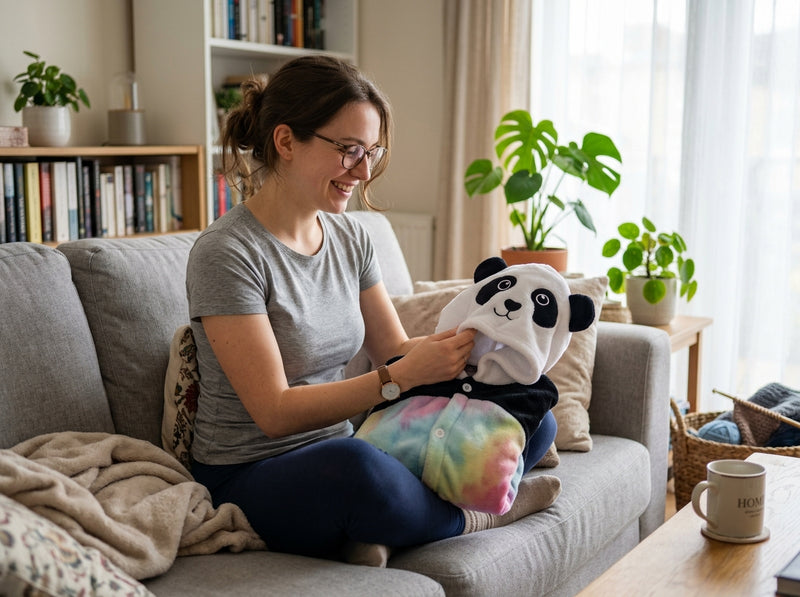
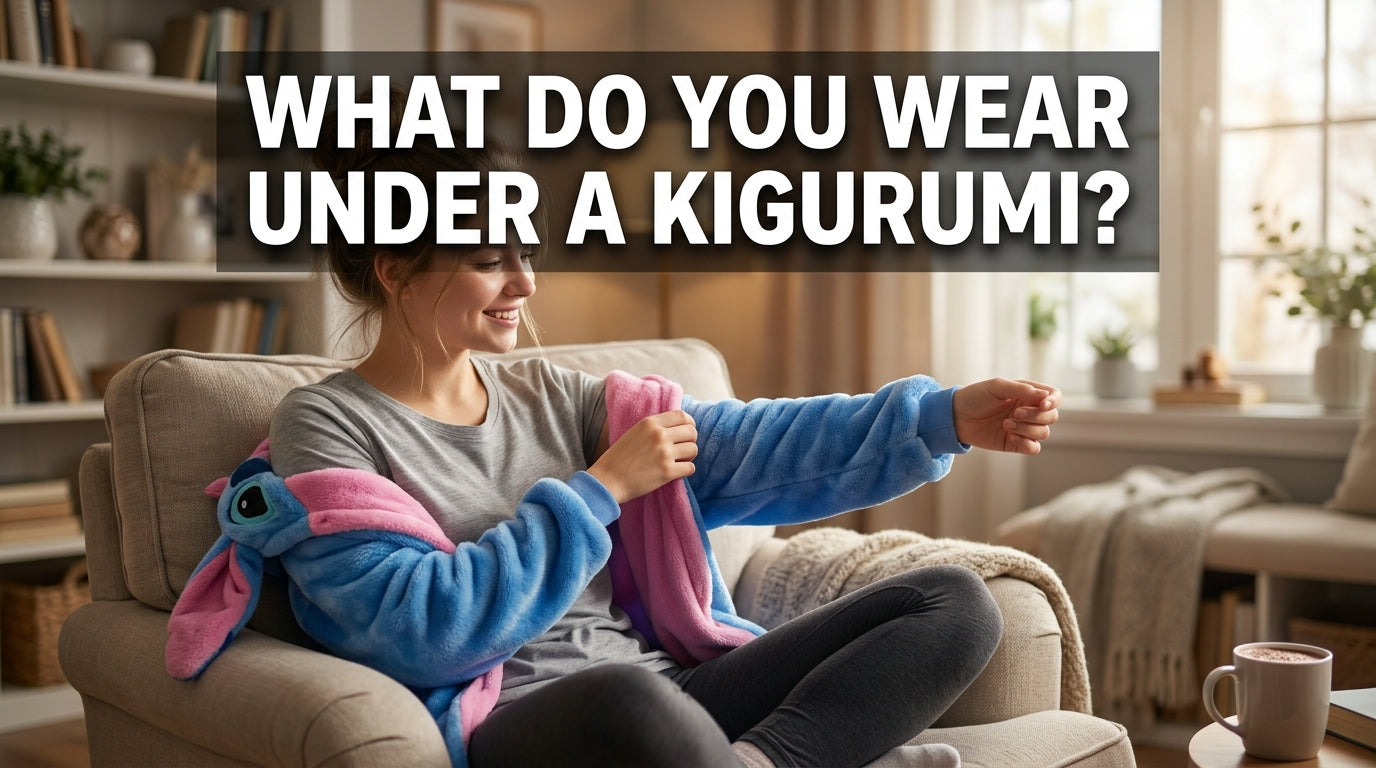
The most popular choice is simple: a basic cotton t-shirt and underwear or shorts. Cotton is breathable, soft against the skin, and absorbs moisture without making you feel clammy. For most casual indoor use, this is all you need.
For colder conditions, people often add a light long-sleeve layer or thermal base layer underneath. The goal is to regulate temperature without adding so much bulk that the kigurumi feels tight or restricts movement.
🌡️ For Cold Weather or Outdoor Use
When wearing a kigurumi outside during fall or winter events, layering becomes more important. A thin thermal base layer, like a moisture-wicking long-sleeve top and leggings, works well. These materials pull sweat away from the skin and keep you insulated without adding excessive thickness.
Avoid heavy wool sweaters or thick hoodies underneath. Kigurumi are designed with a specific fit, and bulky layers underneath will stretch the seams, limit arm movement, and make the whole experience uncomfortable.
☀️ For Warm Weather or Indoor Parties
If you’re wearing a kigurumi at a convention, sleepover, or indoor gathering where the heat is already on, go minimal. A light cotton tank top and underwear or thin shorts is the ideal combo. Some people even wear just underwear underneath for maximum comfort during shorter wear periods.
The key is avoiding layers that add unnecessary heat. Synthetic fabrics like polyester blends can trap moisture against the skin, so cotton or bamboo-based underlayers are better choices in warm settings.
🛏️ What to Wear Under a Kigurumi for Sleeping
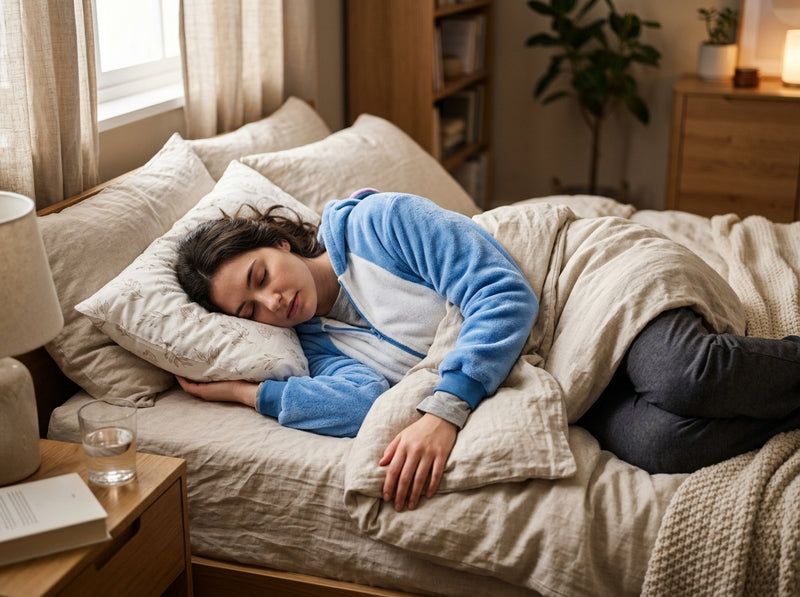
Kigurumi are popular as sleepwear, and for good reason. They’re warm, soft, and feel like wearing a giant hug. But sleeping in one requires a slightly different approach to underlayers compared to daytime wear.
For sleeping, lightweight cotton pajama shorts or underwear are the go-to choice. You want minimal fabric so your body can regulate temperature naturally through the night. Overheating during sleep disrupts rest, so the lighter the underlayer, the better.
Some people prefer to sleep in just their kigurumi with nothing but underwear underneath. This works fine as long as the interior lining of your kigurumi is soft and non-irritating against bare skin. Check the inner seams, too; rough stitching can cause irritation over several hours.
⚠️ Tips for Comfortable Kigurumi Sleep Wear
- Choose seamless underwear to avoid pressure points during the night
- Avoid socks with tight elastic bands that cut off circulation
- Keep a glass of water nearby since fleece can cause mild dehydration from warmth
- If you share a bed, be aware that kigurumi add significant warmth to the sleeping environment
🎭 Kigurumi vs. Onesie: Does the Underlayer Differ?
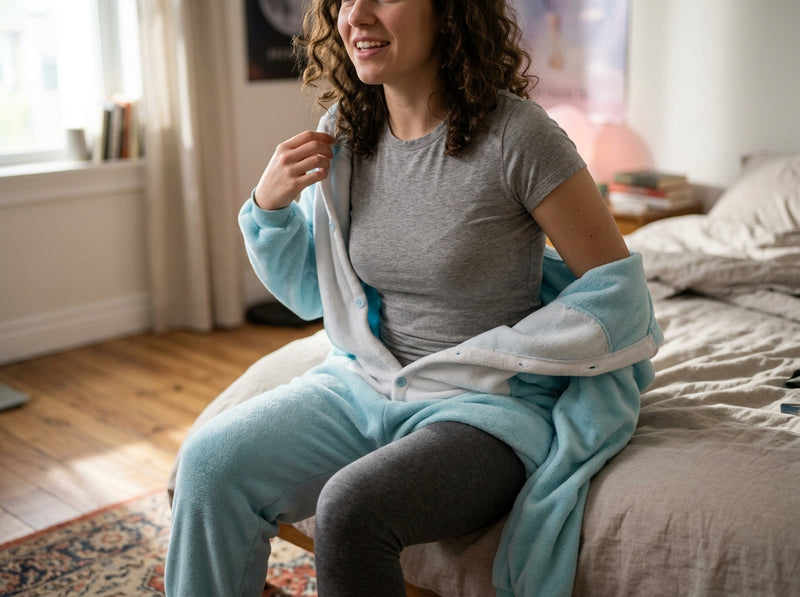
There’s often confusion about whether kigurumi and regular onesies require different underlayers. The answer depends on the specific garment’s construction. If you’ve ever wondered about whether a kigurumi is the same as a onesie, the distinction matters here: traditional kigurumi use thicker fleece and often have more structured hoods and character details, while fashion onesies vary widely in weight and material.
A thicker kigurumi needs a lighter underlayer. A thinner novelty onesie might actually benefit from a slightly warmer base layer in cold conditions. Always assess the weight and breathability of the outer garment before deciding what goes underneath.
| Scenario | Recommended Underlayer | What to Avoid |
|---|---|---|
| 🏠 Indoor casual wear | Cotton t-shirt + underwear | Thick sweaters or fleece layers |
| ❄️ Outdoor cold weather | Thermal base layer top + leggings | Bulky wool or padded layers |
| 🎉 Convention or party | Light tank top + thin shorts | Synthetic moisture-trapping fabrics |
| 🛏️ Sleeping | Underwear or light cotton shorts | Long pants or heavy pajamas |
| ☀️ Warm climate | Underwear only or light cotton | Any additional insulating layers |
🧦 Don’t Forget Socks and Feet
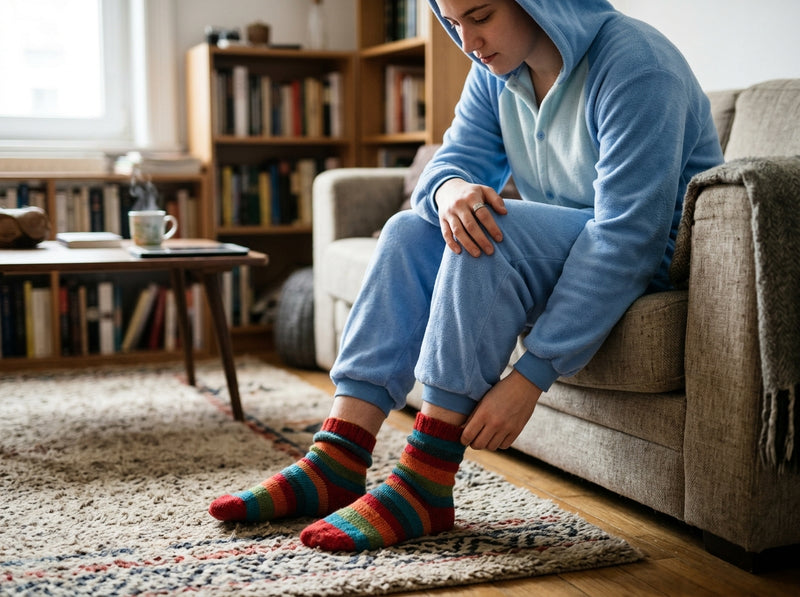
Many kigurumi come with built-in foot coverings or attached booties. If yours does, wearing thin cotton socks underneath keeps the interior clean and adds a small buffer of comfort. Avoid thick woolen socks inside kigurumi booties; they’ll make the fit too tight and restrict circulation.
If your kigurumi doesn’t have foot coverage, regular ankle socks or no-show socks work perfectly. For outdoor use, you might want to slip on a pair of slippers or indoor shoes over the kigurumi feet rather than adding extra sock layers inside.
👶 Special Considerations for Kids Wearing Kigurumi
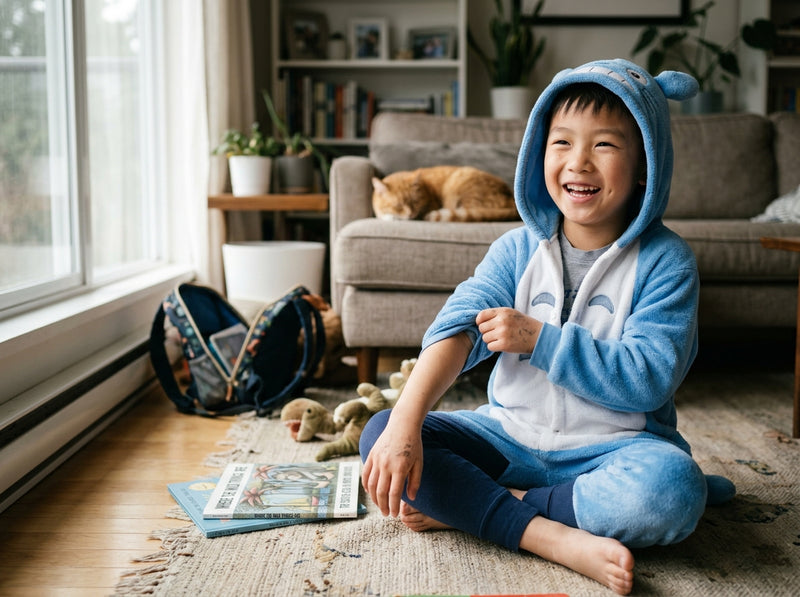
Children have different temperature regulation than adults, and they tend to move around more, which generates extra body heat. For kids, a lightweight cotton onesie or underwear set underneath is usually the best starting point. Avoid overdressing children in kigurumi, especially for sleep, as overheating is a real concern for younger wearers.
Sizing also plays a role. Children’s kigurumi should have enough room for a thin underlayer without being stretched. If you’re shopping for younger family members and wondering about sizing and style options, it’s worth exploring kigurumi options for kids to find designs that fit properly with room for a comfortable base layer.
For toddlers, skip the underlayer entirely if the kigurumi interior is soft enough, or use a simple cotton bodysuit. The goal is warmth without overheating, and comfort without bulk.
✅ Quick Fabric Guide: Best Underlayer Materials
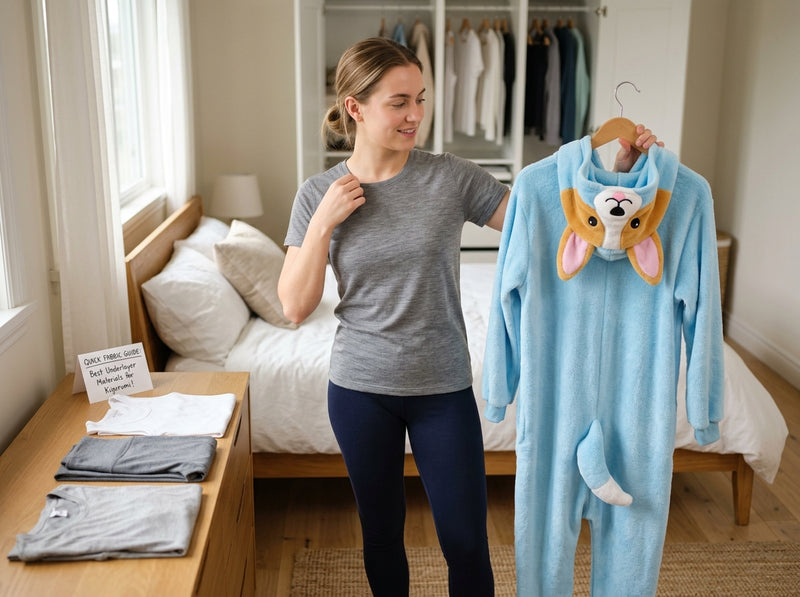
Not all fabrics behave the same way under a kigurumi. Here’s a breakdown of the most common underlayer materials and how they perform:
- Cotton: Breathable, soft, absorbs sweat well, ideal for most situations
- Bamboo: Naturally moisture-wicking, gentle on sensitive skin, great for extended wear
- Moisture-wicking polyester blends: Good for active use or conventions where you’re moving a lot
- Thermal knit (waffle weave): Best for cold outdoor conditions, adds warmth without bulk
- Silk or satin: Smooth against skin but doesn’t absorb moisture well, avoid for long wear
- Wool (merino): Excellent temperature regulation but adds bulk, use only in very cold settings
Cotton remains the most practical all-around choice for the majority of kigurumi wearers. It’s affordable, widely available, and performs consistently across different temperatures and activity levels.
🎯 Final Thoughts on Kigurumi Underlayers
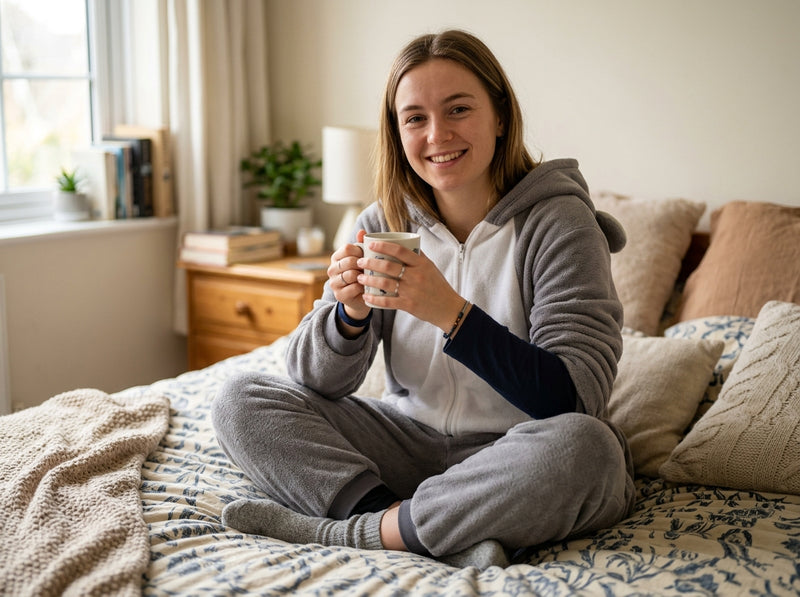
What you wear under a kigurumi comes down to three factors: temperature, activity level, and how long you plan to wear it. For most people, a simple cotton t-shirt and underwear covers every casual situation. Cold outdoor use calls for a thin thermal base layer, while warm or active environments call for even less. Keep it simple, prioritize breathable fabrics, and avoid anything bulky that restricts movement or traps excess heat. Getting the underlayer right makes the entire kigurumi experience significantly more enjoyable, whether you’re lounging at home, attending an event, or drifting off to sleep in your favorite character costume.